


Polyurea Spray Tech
11 November، 2024
Epoxy Works
11 November، 2024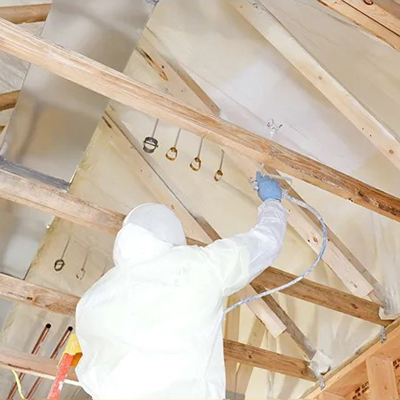
Polyurethane Foam Overview
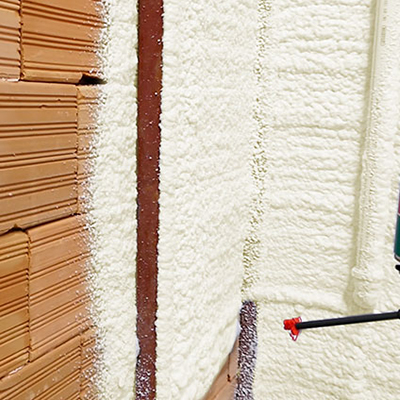
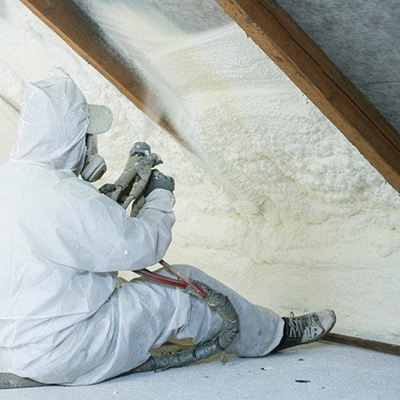
Spray Polyurethane Foam (SPF) is a high-performance insulation material commonly used in homes and buildings. Let’s explore the basics:
1. Composition and Application: o SPF is a spray-applied cellular plastic created by mixing specific chemicals to form foam. o When applied, it expands rapidly, creating an insulating layer that also acts as an air seal and moisture barrier. o Properly installed SPF forms a continuous barrier on walls, corners, and contoured surfaces. o It effectively reduces unwanted air infiltration through cracks, seams, and joints. 2. Types of SPF: o Closed-Cell SPF: ▪ Higher R-value (greater than 6.0 per inch). ▪ Excellent moisture barrier (low moisture permeability). ▪ Functions as an air barrier. ▪ Resists water. ▪ Medium density (1.75–2.25 lbs./ft³). ▪ Absorbs sound. o Open-Cell SPF: ▪ Lower R-value (approximately 3.5 per inch). ▪ Lower moisture barrier (higher moisture permeability). ▪ Still functions as an air barrier. ▪ Lower density (0.4–1.2 lbs./ft³). ▪ Absorbs sound very well. 3. Chemical Components: ▪ “B” side: A blend of polyols, catalysts, blowing agents, flame retardants, and surfactants. o After mixing and reacting, the foam hardens rapidly. 4. Safety Considerations: o Professionals should understand safety data sheets (SDS) for both “A” and “B” side chemicals. o Educate customers about installation procedures and reentry times after application. In summary, SPF provides excellent insulation, air sealing, and moisture protection. Its type (closed-cell or open-cell) depends on specific requirementsAdvantages of Polyurethane Foam
Polyurethane foam has several advantages, Let’s explore some of its key benefits:
1. Excellent Thermal Insulation: o Polyurethane foam is a highly effective thermal insulator when applied by spraying. It can reach even the smallest gaps, providing permanent and damage-resistant insulation for buildings. o By eliminating thermal bridges, it prevents heat escape during winter and keeps heat from entering during summer, resulting in lower heating costs. 2. Quick Application: o Polyurethane foam is easy to apply using the spray method. It expands several dozen times its original volume and cures rapidly. o Compared to other insulation materials, spray insulation with polyurethane foam takes less time. o Its adaptability makes it suitable for slanted ceilings and cramped spaces. 3. Durability and Resistance: o Polyurethane foam maintains its shape and supportive properties over time, making it ideal for applications requiring durability, such as mattresses and automotive seats1. o It is resistant to wear and tear, ensuring longevity. 4. Versatility: o Polyurethane foam is versatile and finds applications in various fields. o Rigid polyurethane and polyisocyanurate foams are popular for energy-efficient and versatile insulation in commercial and residential properties2. 5. Environmentally Friendly: o Made from renewable resources like soybeans and cornstarch, polyurethane foam is environmentally friendly3. o It contributes to sustainability while providing effective insulation. 6. Hygienic and Safe: o Polyurethane foam is non-toxic, preventing bacteria growth on or inside it. As a result, it requires less frequent cleaning compared to other furniture materials3. In summary, polyurethane foam offers excellent insulation properties, ease of application, durability, and versatility, making it a preferred choice for various applicationsSpray Polyurethane Foam (SPF) offers several advantages over traditional insulation materials
Here are some of the key benefits:
• Energy Efficiency: SPF provides an airtight seal and high R-value, which means it has superior insulating properties. This can lead to significant energy savings by maintaining consistent indoor temperatures and reducing the workload on heating and cooling systems1. • Air Sealing Excellence: Due to its expansive nature, SPF can fill even the smallest gaps and cracks, creating an effective air barrier that prevents air leakage, a common issue with other insulation types2. • Moisture Resistance: SPF is highly resistant to moisture, which helps prevent mold growth and water damage. This is particularly beneficial in climates prone to high humidity or areas susceptible to water infiltration1. • Longevity: Unlike some other insulation materials that can settle or degrade over time, SPF maintains its shape and effectiveness for many years, reducing the need for replacement or additional insulation2. • Structural Stability: When applied, SPF can add strength to the walls and roof of a building due to its rigid nature, providing an additional layer of protection against external forces3.v • Quick Application: The application process for SPF is relatively quick and can be completed faster than installing traditional insulation materials like fiberglass or cellulose1. • Versatility: SPF can be used in a variety of settings, from residential to commercial, and is suitable for both new construction and retrofit projects4. • Sound Insulation: SPF has sound-dampening properties, which can contribute to a quieter indoor environment by reducing the transmission of noise from outside or between different rooms within a structure2. • Eco-Friendly: By reducing energy consumption, SPF can lower greenhouse gas emissions associated with heating and cooling, making it an environmentally friendly choiceAPPLICATION FIELD FOR POLYURETHANE FOAM
Spray Polyurethane Foam (SPF) has a wide range of applications due to its excellent insulating properties and ability to form a continuous barrier. Here are some of the primary application fields of SPF:
Residential and Commercial Insulation: SPF is commonly used for insulating walls, floors, and roofs in both residential and commercial buildings. It provides high thermal resistance and air sealing, which can significantly reduce energy costs1. • Air Sealing: By creating an airtight seal, SPF can prevent unwanted air infiltration through cracks, seams, and joints, enhancing the energy efficiency of buildings1. • Roofing: SPF roofing systems are popular for their durability and insulating properties. They can be applied over existing roofs, reducing the need for tear-off and disposal of old roofing materials2. • Industrial Applications: SPF is also used in various industrial settings for insulating tanks, pipes, and other equipment to maintain temperature control and prevent condensation2. • Specialty Applications: There are specialty applications of SPF that include soundproofing, flotation for boats and docks, and even theatrical sets and props due to its versatile and moldable nature2. • Retrofit Applications: SPF can be used in retrofitting projects to improve the energy efficiency of existing buildings. It can be applied to the interior or exterior of walls, attics, and crawl spaces3. • Below-Grade Insulation: Closed-cell SPF is particularly effective for exterior subgrade thermal and moisture protection on the outside of below-grade walls2. These are just a few examples of the many uses of SPF. Its ability to conform to irregular shapes and provide a seamless insulating layer makes it a valuable material in a variety of construction and renovation projects. Remember to always follow best practices for installation and safety when working with SPF materialsTHE R-VALUE
The R-value is a measure of thermal resistance used in the building and construction industry.
It indicates how well a material can resist heat flow. The higher the R-value, the better the material is at insulating because it provides greater resistance to the transfer of heat. This is crucial for maintaining energy efficiency in buildings, as it directly impacts the ability to keep heat in during the winter and out during the summer. Here’s a more technical explanation: The R-value is the temperature difference per unit of heat flux needed to sustain one unit of heat flux between the warmer surface and colder surface of a barrier under steady-state conditions1. In simpler terms, it measures how well a material or assembly (such as an insulated wall) resists the transfer of heat from one side to the other. The formula for R-value is given by: R=QΔT Where: •( R ) is the R-value •( Delta T ) is the temperature difference between the two sides of the barrier •( Q ) is the heat flux (the rate of heat transfer per unit area) In practice, when you’re choosing insulation materials, you would look for a higher R-value because it means the material has a greater ability to insulate. For example, a material with an R-value of R-30 will be more effective at insulating than a material with an R-value of R-13. It’s important to note that the R-value needed for effective insulation can vary based on climate, the part of the building being insulated, and local building codes. Energy Star provides recommended R-values for different regions and parts of a home to help guide insulation choices2. In summary, the R-value is a key factor in determining the effectiveness of insulation materials, and understanding it can help you make informed decisions to improve the energy efficiency of your home or building. Always consult with a professional to determine the appropriate R-value for your specific needs.Calculating the R-value
for a specific insulation material involves understanding its thermal resistance properties. The R-value is determined by the material’s thickness and its thermal conductivity (k-value). Here’s a simplified formula to calculate the R-value:
R=Thermal conductivity (k-value)Thickness of the material (in inches)
For example, if you have a 2-inch thick insulation material with a thermal conductivity of 0.25 Btu•in/h•ft²•°F, the R-value would be calculated as follows:
R=0.252=8.0
This means that the material has an R-value of 8.0, indicating its resistance to heat flow. The higher the R-value, the better the material insulates.
When calculating the overall R-value for a structure like a wall or attic, you need to sum the R-values of all individual layers of insulation. Each material’s R-value is calculated using the above formula, and then they are added together to get the total R-value for the entire assembly1.
It’s important to note that the R-value can also be affected by factors such as installation quality and the presence of air gaps. For accurate calculations and to ensure optimal insulation performance, it’s recommended to consult with a professional or use detailed calculation tools designed for this purpose.